Research and Teaching
Langford Vets and Langford Trust: Tails of Advancing Pet Care
Celebrating the people, research, and innovation shaping the future of veterinary care.

We offer a multi-disciplinary referral service to veterinary surgeons across the UK. We accept emergency referrals 24 hours a day, 7 days a week.
In order to book an appointment with us, you need to request a referral to us from your pet’s usual veterinary practice.
Telephone: 0117 394 0513
Location: Langford House, Langford, BS40 5DUOutstanding veterinary care for horses and ponies in the heart of Somerset
Stables Equine Practice are experienced in dealing with horses and ponies involved in all competitive disciplines - from breeding, to pleasure horses and companions.
Telephone: 01749 830 666 / emergency pager 01379 673 827
Location: Conkerfield, Pennybatch Lane, Wookey, Nr. Wells, BA5 1NHYour local vets for all your pets.
We aim to provide the best possible care for your animals to ensure they are kept fit and healthy throughout their lives. Our practice offers a caring, family feel to ensure that you and your pet receive a personal and friendly service.
Telephone: 01934 852 422
Location: Langford House, Langford, BS40 5DULangford Vets Farm Animal Practice have extensive experience in all aspects of the farming sector and smallholder work including dairy, beef, sheep, goats, camelids, pigs and poultry.
Telephone: 01934 852 650
Location: Langford House, Langford, BS40 5DUWe are a dynamic, customer focused business providing an extensive, high-quality range of laboratory tests across many species.
We also offer an internationally recognised cat genetic testing service to owners and breeders.
Telephone: 0117 394 0510
Location: Langford House, Langford, BS40 5DUAdvancing veterinary education and career excellence
Langford Vets are passionate about promoting career-long learning for veterinary professionals with advanced training and career development opportunities provided through our Langford Academy.
Telephone: Email: brm@langfordvets.co.uk
Location: Langford House, Langford, BS40 5DU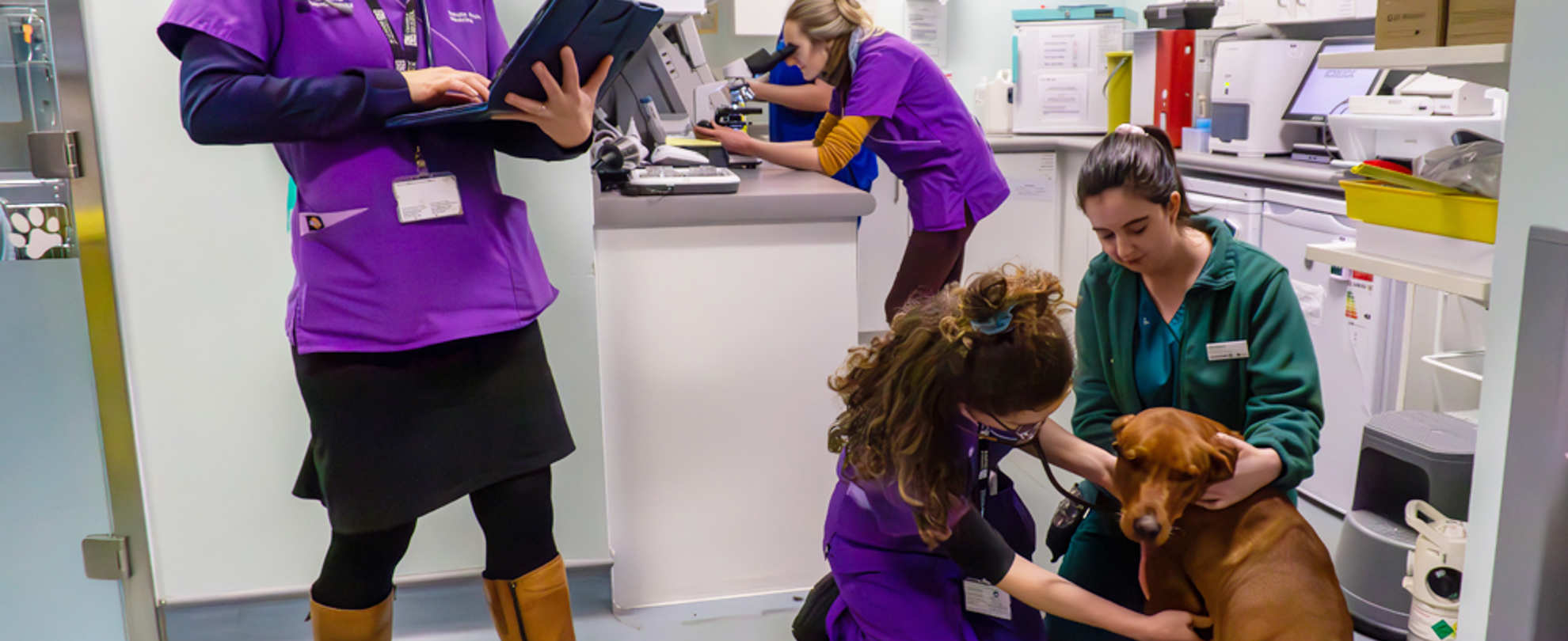

(Including funding success)
December 2025
Angela Fadda received funding from Langford Trust for a study entitled ‘Nerve growth factor in cervical and thoracolumbar canine intervertebral disc herniation and its association with spinal pain: a preliminary study’
Emi Barker received funding from Langford Trust for a study entitled ‘Is there a need to screen for arthropod-vectored infections currently considered non-endemic in the UK in at risk-dogs
Elena Lozano Onrabio received funding from AO Vet research grants for a study entitled ‘Cortical vs headless screws for humeral fissure repair: A biomechanical study
Vicki Black and Natalie Finch received funding from BBSRC for a study entitled ‘Development of a sustainable sourve of feline red blood cells for transfusion medicine’
Pippi Gould received funding from ACVIM for a study entitled ‘The feasibility of whole genome sequencing for identification of causative agents of canine and feline infectious endocarditis’
Angela Fadda has received funding from Cancer Research UK for a study entitled ‘Development of a cheap sensitive blood test for early detection of new and proven biomarkers of glioblastoma using fluorescent carbon dots and nanophotonics’
Celebrating the people, research, and innovation shaping the future of veterinary care.
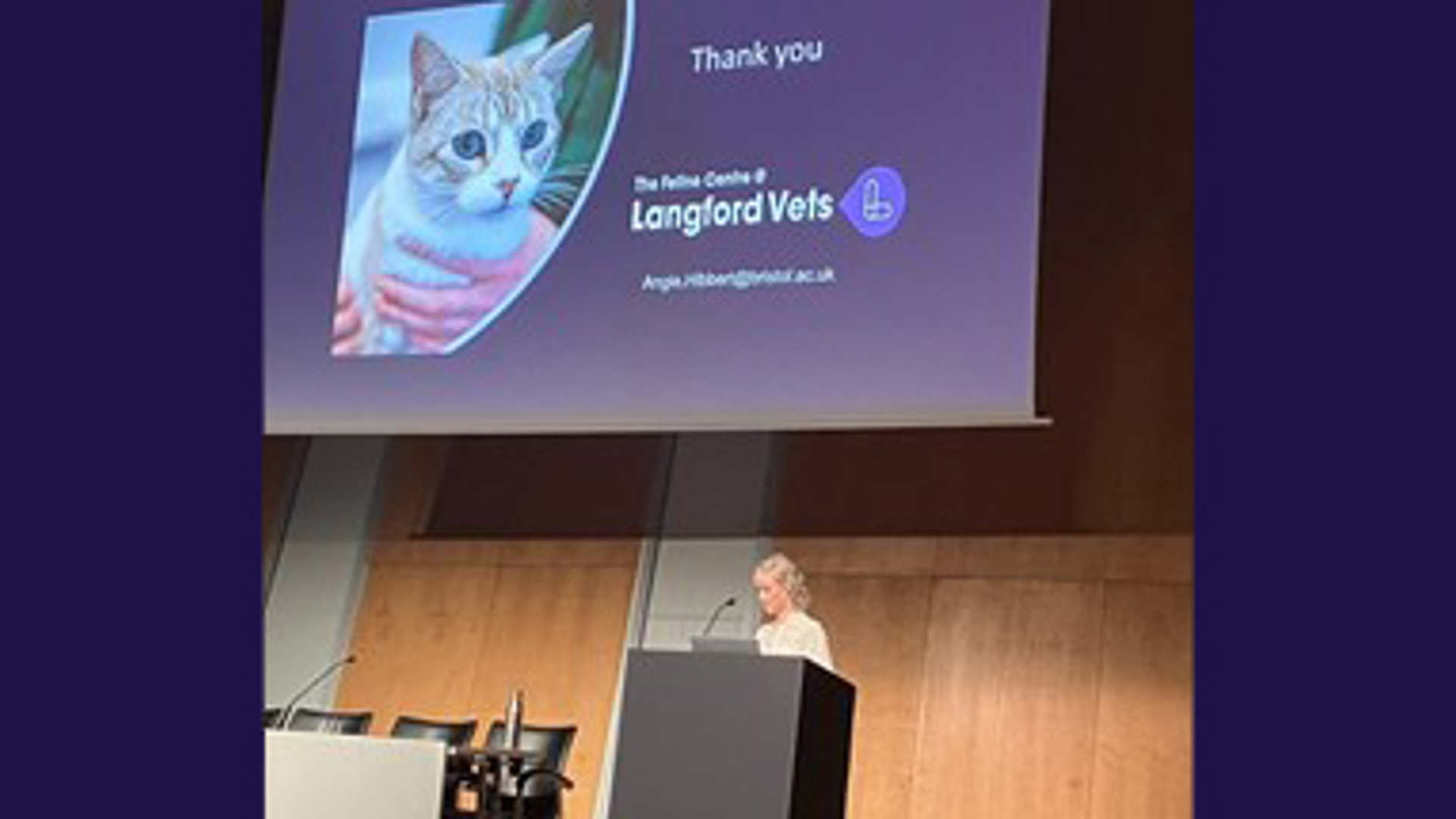
Angie Hibbert, our feline lead delivered an excellent lecture discussing the challenges of antimicrobial therapy in cats.
Choose one of the business areas below to see recent publications from each team:
Canine osteosarcoma is an aggressive bone cancer, predominantly affecting young, large breed dogs. Bone cancers occur when normal bone cells become damaged and divide uncontrollably, forming a mass of growing cells, associated with a local tumour environment. Osteosarcoma is associated with poor survival (50% at 1-year in canines) and there have been no significant advances in treatment or survival in the last five decades. Most dogs with osteosarcoma have tumours on their legs, therefore amputation, sometimes with post-operative chemotherapy, is the recommended treatment. After amputation, the tumour is analysed to confirm a diagnosis of osteosarcoma, and then disposed of in clinical waste. We intend to use waste tumour samples to study osteosarcoma and develop more effective treatment options.
Immunotherapy is a type of cancer treatment which uses drugs to encourage the immune system to fight cancer. In many cancers, immune cells are switched off and become inert when they enter the tumour, owing to molecules released within the local tumour environment. Blocking immunosuppressive pathways within tumours can reinvigorate the immune system and allow tumour killing. There are no immunotherapies available for canine osteosarcoma at the moment, because the immune response to osteosarcoma is not well understood.
We will stain samples of canine osteosarcoma with fluorescent markers and use a microscope to identify immune cells, extract cells of interest, and analyse their genetic material. Together, these findings will tell us what happens to immune cells when they enter osteosarcoma masses, and help us to identify immunotherapies that can be used in canine osteosarcoma. Together with the VetCompass(TM) programme at the Royal Veterinary College, we also carry out research into the genetics of canine osteosarcoma, looking at which breeds are most at risk with the aim of improving early detection and intervention strategies.
The work will be carried out by Dr Grace Edmunds, a member of our internal medicine team with a PhD in cancer immunology. Grace collaborates with researchers at Cardiff University, the University of Sheffield and the Royal Veterinary College.
We are recruiting osteosarcoma cases, please contact sah@langfordvets.co.uk to refer a case or enquire about enrolling your dog in our studies.
The Mitral Valve Clinic at Langford Vets is run by Prof Melanie Hezzell, a specialist veterinary cardiologist with a PhD in the epidemiology of canine myxomatous mitral valve disease. The Mitral Valve Clinic is a prospective, longitudinal cohort study of canine myxomatous mitral valve disease. Participating dogs typically attend the clinic every 6 months. At each visit they undergo comprehensive monitoring of their disease, including a full clinical examination, blood pressure measurement, an ECG, an ultrasound of their heart and blood and urine tests. The clinic aims to collect information about how the disease develops and progresses over time, and the factors that determine why some dogs have mild, non-progressive disease while others have a severe, rapidly progressive phenotype.
The clinic aims to benefit both current patients, by providing heavily subsidised expert monitoring for dogs with mitral valve disease and future patients, by investigating how and why this disease develops and progresses. Our goal is to develop new treatments and therapies that will improve the dogs’ lives. The clinic also nurtures the next generation of veterinary clinical researchers by providing opportunities for veterinary surgeons to undertake Masters by Research and PhD studentships.
For more information, please contact Melanie Hezzell: mh16511@bristol.ac.uk or Langford Vets Small Animal Hospital reception 0117 394 0513.
Langford Vets has a clinical research fund to support research projects undertaken by Langford Vets employees and University of Bristol employees who work within Langford Vets clinics.
Here are some of the latest projects that have been funded:
Background:
Surgical techniques for hepatic lobectomy in cats are commonly extrapolated from canine procedures, there is limited detailed anatomical documentation of feline hepatobiliary vasculature. A 2009 study by Covey et al. extensively documented canine liver surgery by mapping precise vascular and biliary relationships. A similar foundation is lacking for feline patients to optimize surgical outcomes.
The study will utilize polymer injection techniques in fresh feline cadaver specimens to create detailed three-dimensional maps of the hepatic vasculature and biliary system. These specimens will undergo careful dissection and documentation to establish consistent anatomical patterns.
This research will provide veterinary surgeons with essential anatomical knowledge specific to feline patients, enabling more precise and safer hepatic procedures. The resulting surgical guidelines will be particularly valuable when operating on cats with hilar masses where traditional mass ligation techniques may be contraindicated. This work represents a crucial step toward improving surgical outcomes in feline hepatic surgery and reducing perioperative complications.
Humeral Intracondylar Fissure and Incomplete Ossification of the Humeral Condyle are two orthopaedic diseases that frequently affect pets in the UK. The gold standard treatment for both diseases is a placement of an Intracondylar Screw. However, this surgery also has high complication rates: mainly seroma and infection short-term, and implant fatigue failure long-term. Different techniques and implants have been studied and are currently used in the market.
Our aim with this study is to assess different types of commercially available intracondylar screws and establish which implant has the greatest ultimate load to failure and resistance to cyclical loading. Furthermore, we will assess whether the method of application (i.e. lag vs positional screw placement) affects their biomechanical performance. We selected six commonly used commercially available implants: Synthes® 4.5mm cortical screws, Synthes® 5.5mm cortical screws, N2® 4.5mm Headless IOHC screws, Synthes® 5.0mm locking screws and Acumed® Acutrak2 4.7mm headless screws. Each implant will undergo testing in two different experimental conditions, simulating their clinical application.
Our hypothesis is that there will be no clinically significant difference in the measured variables between implants under the different testing conditions.
Myxomatous mitral valve disease (MMVD) is the most common heart disease in dogs and is characterised by mitral valve degeneration. The American College of Veterinary Internal Medicine staging scheme divides dogs with MMVD into stages A (at risk), B1 (preclinical disease without cardiomegaly), B2 (preclinical disease with cardiomegaly), C (congestive heart failure (CHF)) and D (refractory CHF). Decreased renal perfusion is seen in dogs with stage B2, but not stage A or B1, MMVD; this is an example of the cardiorenal syndrome, in which heart disease results in kidney dysfunction. Decreased renal perfusion might be explained by endothelial dysfunction, which develops in preclinical MMVD.
The endothelial glycocalyx (eGlx) is a proteoglycan-rich layer that lines the entire vascular endothelium and is important in preserving endothelial function. Due to its fragile nature, the glycocalyx is challenging to study. However, our group has developed a method to quantify red blood cell glycocalyx (RBCGlx) depth, which reflects the depth of the vascular eGlx (patent application no. GB2410240.2). RBCGlx depth is lower in dogs with stage B2 MMVD compared with stages A and B1. This reflects the reported changes in renal perfusion, supporting our hypothesis that glycocalyx damage results in kidney dysfunction. Additionally, in other species, glomerular eGlx damage results in proteinuria, a well-established marker of renal dysfunction.
This study aims to quantify RBCGlx depth and proteinuria (urinary protein to creatinine ratio) in dogs with, or at risk of developing preclinical MMVD (stages A-B2) attending the Mitral Valve Clinic. For each dog, the following data are collected: history, physical examination, non-invasive blood pressure, electrocardiography, echocardiography and circulating cardiac biomarkers. A free-catch urine sample is also collected. We hypothesise that dogs with stages B2 MMVD have reduced RBCGlx depth which will be correlated with proteinuria (indicating loss of glomerular capillary eGlx).
Episodic movement disorders in dogs are being described with increasing frequency. Some breed-specific forms have been associated with genetic mutations or have specific triggers (such as emotional arousal), but most are idiopathic and have not been associated with a trigger. Stress has been strongly implicated as a trigger in similar human conditions, and our clinical experience supports this in dogs; meaning behavioural therapy might be very useful in managing this lifelong condition.
Before planning research into the effectiveness of behavioural therapy, some important unanswered questions need to be addressed:
We plan to review cases referred to Langford Vets for assessment or advice and identify those with episodic movement disorder as the most likely diagnosis. Preliminary analysis suggests we receive 10-20 advice requests or referrals per month. The age, sex and breed of the affected dogs will be recorded to provide demographic data. The clinical notes will be reviewed for a description of a trigger and the proportion of genetic or triggered dogs vs those without a genetic cause or trigger will be calculated. Finally, the total number of advice requests and referrals for movement disorders will be compared to the total number for idiopathic canine epilepsy to evaluate the equivalent disease burden when compared to these comparatively more researched diseases.
Our Small Animal Hospital holds regular inset days to upskill our teams and to share our expertise with our colleagues. These are a mix of taught and practical sessions covering a huge variety of topics often with fascinating external speakers.
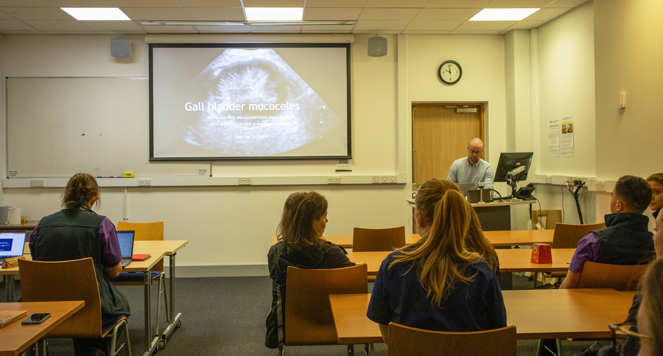
Our Small Animal Hospital holds regular inset days to upskill our teams and to share our expertise with our colleagues. These are a mix of taught and practical sessions covering a huge variety of topics often with fascinating external speakers.