
Meet Douglas
Douglas is a Border Collie with a big personality and an even bigger love of being active. Whether it's agility, exploring on walks or learning something new, he thrives when he has a job to do.
Before his injury, Douglas competed at Grade 2 agility level and trained regularly with his owner. Agility wasn't simply a hobby for them; it was something they enjoyed together and a huge part of their routine. Outside of training, Douglas loved long walks, travelling with his family and spending time with his canine companion at home.
When Douglas suffered an intervertebral disc extrusion, everything changed unexpectedly. What had been a fit, active dog enjoying an energetic lifestyle suddenly became a patient facing emergency spinal surgery and a long road to recovery.
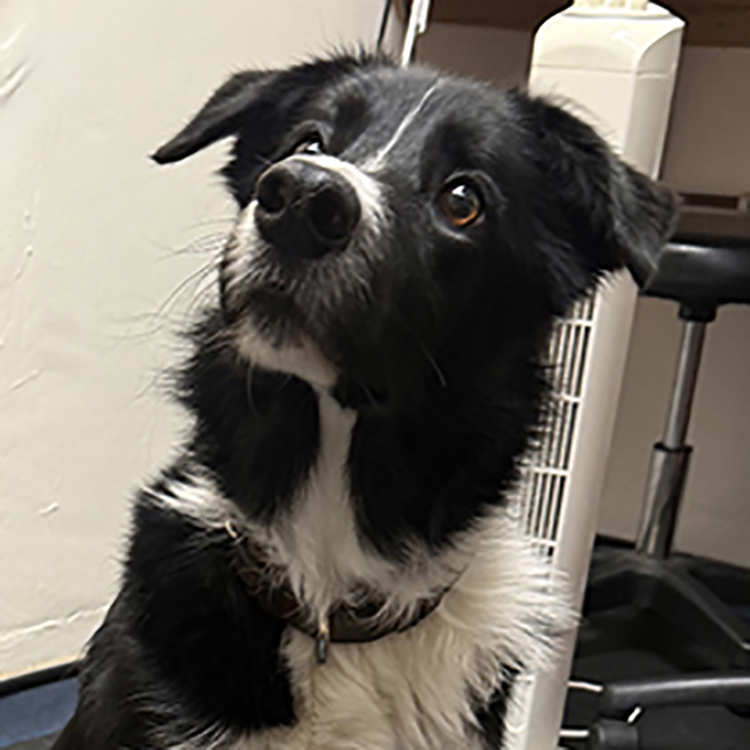
Meet Douglas
Douglas is a Border Collie with a big personality and an even bigger love of being active. Whether it's agility, exploring on walks or learning something new, he thrives when he has a job to do.
Before his injury, Douglas competed at Grade 2 agility level and trained regularly with his owner. Agility wasn't simply a hobby for them; it was something they enjoyed together and a huge part of their routine. Outside of training, Douglas loved long walks, travelling with his family and spending time with his canine companion at home.
When Douglas suffered an intervertebral disc extrusion, everything changed unexpectedly. What had been a fit, active dog enjoying an energetic lifestyle suddenly became a patient facing emergency spinal surgery and a long road to recovery.
Referral and Surgery
On 5th November 2025, Douglas was referred for further investigation after developing neurological deficits affecting his hind limbs. At admission, Douglas was non ambulatory paraparetic, with complete loss of function in his left hindlimb. MRI identified an intervertebral disc extrusion causing significant spinal cord compression.
Douglas underwent a left-sided hemilaminectomy. Following surgery, Douglas began the challenging process of neurological recovery.
Inpatient and Initial Physiotherapy
Following surgery, Douglas was unable to walk independently and required a hind limb harness for support.
Although he had retained some stepping movements in both hind limbs, he remained significantly ataxic and required assistance with activities such as standing and sitting. Simple things that had once come naturally now required support and supervision.
At his first physiotherapy assessment, Douglas demonstrated:
Hind limb weakness and ataxia
Reduced coordination, particularly on the left side
Reduced balance and body awareness
Difficulty with posture and weight distribution
Compensatory tension through the front end
Despite these challenges, Douglas approached rehabilitation with exactly the same attitude he approached everything else in life: enthusiastically. He quickly showed us that he loved having tasks to complete, especially when food was involved.
His owners were equally committed. They adapted the home environment, covering slippery floors with mats and carefully following his exercise plan to give him the best possible chance of recovery.
Progress
Over the following months, Douglas made steady and consistent improvements.
He progressed from requiring a hindlimb harness to walking independently. His posture improved, hindlimb coordination began to return and his confidence increased significantly.
The focus of Douglas' early rehabilitation wasn't agility; it was about rebuilding the foundations that would eventually make those activities possible again.
Early exercises such as supported walking, sit-to-stand work, paw placement exercises and passive range of motion movements were put in place. Each exercise had a purpose; helping Douglas relearn how to use his body effectively following his spinal injury.
One of the most important aspects of his recovery was taking things slowly. Whilst Douglas always wanted to do more, rehabilitation focused on quality rather than speed. We wanted to ensure he could perform each exercise correctly before introducing additional challenges. This approach helped build the strength and control needed for the next stage of his recovery.
Returning to everyday life
Recovery isn't only measured by clinical assessments and exercise programmes. Some of the most rewarding milestones were the everyday moments that showed Douglas was returning to being himself. His owners reported that he coped brilliantly with trips around the UK during his rehabilitation. He was able to enjoy longer walks on holiday and became increasingly confident exploring different places
One particularly memorable achievement was Douglas jumping into the van independently again. This may seem like a simple action, but following spinal surgery it represented a huge milestone and demonstrated how much strength and confidence he had regained. His personality also began to shine through once more. He increasingly wanted to play with his brother in the household. These moments reminded us that rehabilitation is about getting Douglas back to the things he enjoyed most.
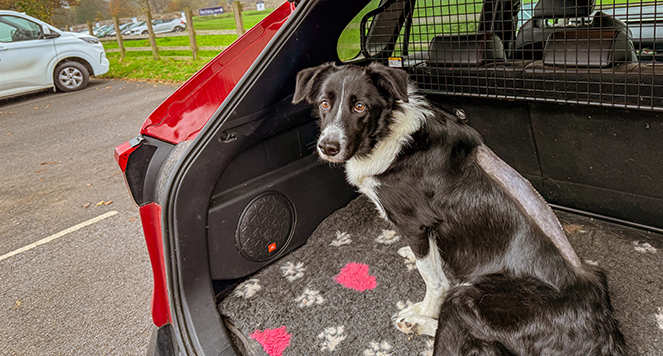
Returning to everyday life
Recovery isn't only measured by clinical assessments and exercise programmes. Some of the most rewarding milestones were the everyday moments that showed Douglas was returning to being himself. His owners reported that he coped brilliantly with trips around the UK during his rehabilitation. He was able to enjoy longer walks on holiday and became increasingly confident exploring different places
One particularly memorable achievement was Douglas jumping into the van independently again. This may seem like a simple action, but following spinal surgery it represented a huge milestone and demonstrated how much strength and confidence he had regained. His personality also began to shine through once more. He increasingly wanted to play with his brother in the household. These moments reminded us that rehabilitation is about getting Douglas back to the things he enjoyed most.
Returning to Agility training
Returning to agility was always a long-term goal, but it wasn't something that happened overnight. Before any agility training was introduced, Douglas needed to demonstrate sufficient strength, balance, coordination and core control through his rehabilitation exercises. Every progression was carefully considered.
As Douglas became stronger, rehabilitation began focusing on the specific physical demands of agility. We added some more advanced exercises to excel his core control and ensure he was able to complete these before starting any training.
We focussed on advanced side stepping, wingwrap exercises, weaves, mountain climbers, and advanced wobble cushion exercises. These exercises were selected to improve Douglas’ core stability, pelvic limb strength, turning mechanics and jump preparation.
Only once Douglas was performing these exercises well and consistently was agility training gradually reintroduced. This was a key part of his recovery and was about ensuring his body was physically prepared for the demands of training.
Where is Douglas Now?
At his most recent assessment in August 2026, Douglas had made remarkable progress.
He is now fully ambulatory and has returned to agility training. His current activities include weave poles, tunnels and ongoing strength and conditioning exercises. Strength and conditioning remain a vital part of helping Douglas maintain his progress and safely participate in agility long term.
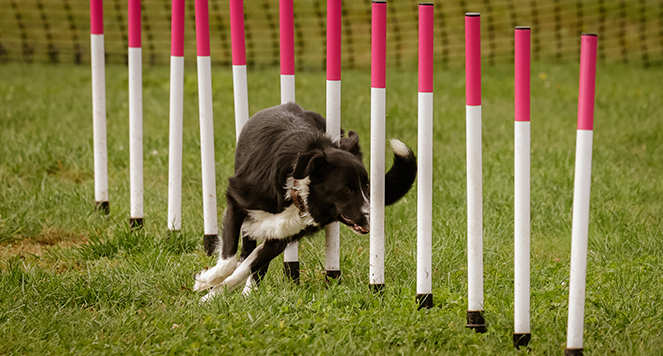
Where is Douglas Now?
At his most recent assessment in August 2026, Douglas had made remarkable progress.
He is now fully ambulatory and has returned to agility training. His current activities include weave poles, tunnels and ongoing strength and conditioning exercises. Strength and conditioning remain a vital part of helping Douglas maintain his progress and safely participate in agility long term.
Douglas has made an incredible recovery, and his journey is a fantastic example of what can be achieved through close collaboration between our Neurology and Rehabilitation teams. Seeing him not only regain the ability to walk independently, but also return to the agility activities he loves, is a wonderful reminder of the remarkable resilience and recovery potential of dogs following severe spinal cord injuries
The importance of rehabilitation
Douglas' story is a wonderful example of what can be achieved through surgery, physiotherapy and dedication.
When he first presented in November 2025, he was unable to walk independently following severe spinal cord compression. Less than a year later, he has returned to agility training and is enjoying the active lifestyle he loves.
However, his recovery required months of structured rehabilitation and a committed owner who followed every stage of his exercise programme.
Douglas' journey highlights that rehabilitation following spinal surgery isn't simply about getting a dog walking again. It's about rebuilding strength, confidence and quality of life, helping them return safely to the activities that make them happiest.